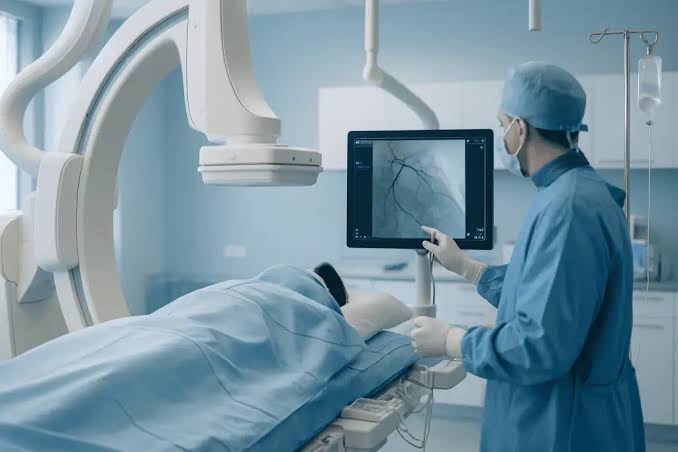
The unknown is usually scarier than the procedure itself. Most people who have been through a coronary angiogram describe it as less dramatic than they imagined: a lot of waiting, a short period of lying still, and a team that talks you through each stage. If you have been booked for angiography Raipur hospitals perform regularly, walking through the day in your mind can ease a good deal of tension.
Arriving and settling in
You will usually be asked to reach the hospital at a set time, often with a relative. Staff check your identity, your reports and the medicines you take. A nurse or doctor may ask about allergies, kidney problems, diabetes and previous reactions to dye. This is the moment to mention anything you think might matter, even if it seems minor.
You will change into a hospital gown, and a small cannula is placed in a vein, usually in the hand or forearm, for fluids and medicines during the procedure.
The consent conversation
Before the procedure, a doctor explains what will be done, why, and what could go wrong. You are asked to sign a consent form. This is not a formality to rush through. Ask about anything unclear, and if the plan allows for a stent in the same sitting when a significant blockage is found, understand under what circumstances that would happen.
Moving to the cath lab
The catheterisation lab looks like an operating room with a large X-ray arm positioned above a narrow table. It can feel cool and bright. You lie on your back while monitors track your heart rhythm, blood pressure and oxygen levels. Staff will clean and cover the area where the catheter enters, commonly the wrist and sometimes the groin.
What you will feel
The area is numbed with a local anaesthetic, which stings briefly. After that, most people feel pressure rather than pain as a thin tube is guided through the artery. You stay awake, and you may be asked to take a deep breath or hold it for a moment while images are taken. When the dye is released, many people feel a brief wave of warmth in the chest or body. It passes within seconds, and the team will usually warn you before it happens.
How long does it take?
The study itself is often relatively short, commonly in the range of twenty to forty minutes, though preparation and recovery stretch the total time at the hospital to several hours. If the cardiologist decides to proceed to angioplasty, the procedure naturally takes longer.
Immediately afterwards
When the images are complete, the catheter is withdrawn and the entry site is closed, with a compression band on the wrist or firm pressure on the groin. You will be taken to a recovery area and monitored. Staff check the puncture site, your pulse and your blood pressure at intervals. If the groin was used, you may need to lie flat for a few hours.
Eating, drinking and moving around
Once you are alert, you are generally encouraged to drink fluids, which helps the kidneys clear the dye. Meals are usually allowed once the team is satisfied with your recovery. Wrist access often allows earlier walking than groin access, but follow the instructions given to you.
Hearing the results
The cardiologist will typically explain the findings to you and your family, often using the screen images. The result might be reassuring, might point towards medicines and lifestyle management, or might suggest a stent or other treatment. Ask for the written report and for the images to be provided if you need them for a second opinion.
Going home and what to watch for
Many patients go home the same day, although some stay overnight depending on circumstances. Avoid heavy lifting with the wrist or leg used, and keep the site clean and dry as directed. Contact the team if you notice swelling that grows, bleeding that does not stop with pressure, numbness or colour change in the hand, fever, or chest pain. Do not ignore these signs.
Easing your own nerves
It can help to ask someone to accompany you, to wear comfortable clothes, and to ask the staff to explain each step as it happens. Knowing that the team does this routinely, and that you can speak up if you feel uncomfortable, makes the experience feel far more manageable.