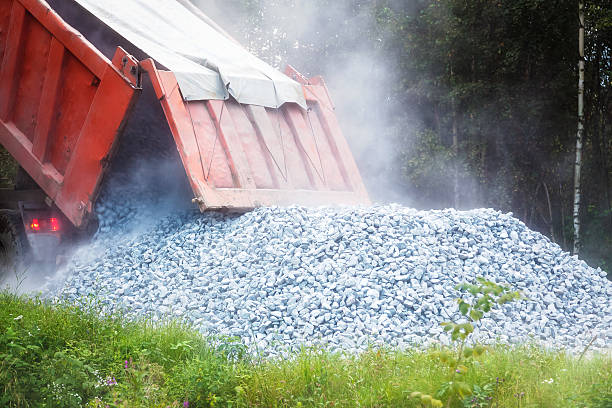
Timing material deliveries well can save more effort than ordering an extra machine for the day. Stone, fill, and topsoil each become useful at different points, and bringing them in too early can crowd the site or leave material exposed to weather. Thoughtful scheduling follows the actual work sequence, keeping crews productive without turning the property into a collection of stockpiles.
Clear the Excavation Area Before the First Major Loads Arrive
Excavation needs room for machines, spoil piles, trucks, and workers to move without obstacles. Scheduling rock and dirt delivery before those paths are clear can put fresh material directly in the way of digging or trenching.
Contractors often wait until unwanted soil has been removed and rough elevations are visible before bringing in base stone or fill. Early measurements can estimate quantity, but exposed subgrade reveals soft areas, unexpected depth changes, and spots that may need a different material than originally planned.
Base Stone Has a Short Window Between Grading and Heavy Traffic
Prepared subgrade should not sit open longer than necessary, especially where rain can soften clay or construction traffic can create deep ruts. Crushed aggregate delivered soon after proofing or rough grading gives equipment a firmer working surface and protects weaker soil from repeated wheel loads.
Builders can then spread and compact the base before concrete trucks, dump trailers, or other heavy vehicles begin crossing the area.
Access roads deserve similar timing because nearly every later delivery depends on them. Building a stable entrance early gives material haulers and service vehicles a safer route through the project. Customers searching for gravel delivery near me may benefit from ordering enough stone for the entrance and key travel lanes first instead of covering sections that still need excavation or utility work.
Drainage Stone Should Follow Trench Preparation Closely
Open drainage trenches can collapse, collect stormwater, or become contaminated with loose soil if they sit unfinished. Clean stone should reach the site close to the time crews are ready to install pipe, fabric, and bedding.
Coordinated gravel delivery in Huntsville AL can shorten the gap between excavation and backfilling, helping trench walls and planned slopes stay intact. Washed aggregate also stays cleaner when it goes directly into the prepared drainage area instead of sitting beside active earthwork where mud and fines can mix into the pile.
Fill Dirt Fits Better After Underground Work Is Settled
Utility lines, drainage systems, footings, and foundation work can change the amount of fill a site actually needs. Bringing large dirt loads before those features are finished may force crews to move the same pile several times just to reopen access or reach another trench.
Waiting until underground installations are ready to cover gives the grading crew a clearer elevation target and a better estimate of the remaining volume.
Compaction should guide delivery size as much as total yardage. Deep fills are usually placed in controlled lifts rather than one full-depth dump, so several staged loads may be easier to handle than one oversized stockpile.
Buyers looking at rock and dirt for sale can plan quantities around what crews can spread, moisture-condition, and compact during each work period. Staging also leaves room to correct weak spots before the next layer hides them.
Driveway Finish Gravel Belongs After the Heaviest Hauling
Construction vehicles can tear up a finished gravel surface while carrying concrete, framing, roofing, or landscape materials. Crews often build a functional base early and hold the cleaner finish layer until heavy hauling begins to taper off.
This approach preserves the final surface while still giving trucks enough support during construction. Fresh gravel for sale can then restore the crown, cover exposed base stone, and repair wheel paths near the end of the job instead of being churned up for months.
Topsoil Delivery Should Wait Until Rough Grading Is Nearly Done
Screened topsoil performs best after major equipment no longer needs to cross future lawn or planting areas. Delivering it too soon exposes the pile to compaction, contamination, and repeated relocation as other trades move through the site.
Landscape crews can work more efficiently when soil arrives shortly before final grading, sod installation, seeding, or bed preparation. Later placement also reduces the chance that clean topsoil will become mixed with construction debris or subsoil.
Weather matters at this stage because wet topsoil can be difficult to spread cleanly and may compact under equipment. Dry stretches offer better conditions for shaping the upper grade, although bare soil should not remain exposed longer than necessary on erosion-prone ground.
Planned rock and dirt delivery should account for both construction progress and a realistic weather window rather than depending entirely on a date selected weeks earlier.
Save the Last Material Order for What the Finished Site Reveals
Final loads often solve details that could not be measured accurately at the start, such as a low driveway shoulder, a settled corner, or a planting area that needs another inch of soil.
North Alabama Rock & Dirt offers gravel, crushed stone, fill dirt, topsoil, and related materials for Huntsville-area construction, grading, drainage, driveway, and landscape work, giving homeowners and contractors a practical way to match later deliveries to what the finished site actually needs.
Holding part of the order until elevations and surfaces are visible can reduce excess stockpiles while keeping enough material available for the last adjustments.